Teacher burnout is real, and most educators can feel it creeping in long before it fully hits. Between long hours, emotional demands, and the pressure to do it all, it’s easy to go from passionate to completely drained. The challenge is that burnout builds slowly, often disguised as “just a busy week” that never really ends.
The good news is that preventing burnout doesn’t require a career change or a total life overhaul. Small shifts in routines, boundaries, and expectations can make a big difference. These tips are practical, realistic, and designed to help teachers protect their energy, stay grounded, and keep doing the work they love without running themselves into the ground.
Set Boundaries!
Set clear “off-duty” hours. During this time, do not check emails, do not work on lesson planning, grading, etc. Try not to even scroll for school-related ideas!
You may need to delete your school email from your phone and instead check emails before school starts each day.
Leave Work at School
You won’t be tempted to pull out papers to grade or write lesson plans if your work is not with you. Leave the papers at school. Leave the textbooks at school.
At the end of the day, this is a job, and the work will be there the next day. If you find yourself behind on grading or feeling like you can’t get lessons prepared, you may need to set up a short time before or after school to focus on those things, and/or you may need to reevaluate how you are grading or lesson planning and managing your time within school hours. More on that later.
Become Really Good at Saying “NO”
Avoid overcommitting to committees and other volunteer roles, especially if you are already feeling overwhelmed or have a full workload.
There will always be things trying to take up your time and people trying to get you to take on more; know your limits, and know that you are still a good teacher even if you say no to additional responsibilities.
Get Some Help!
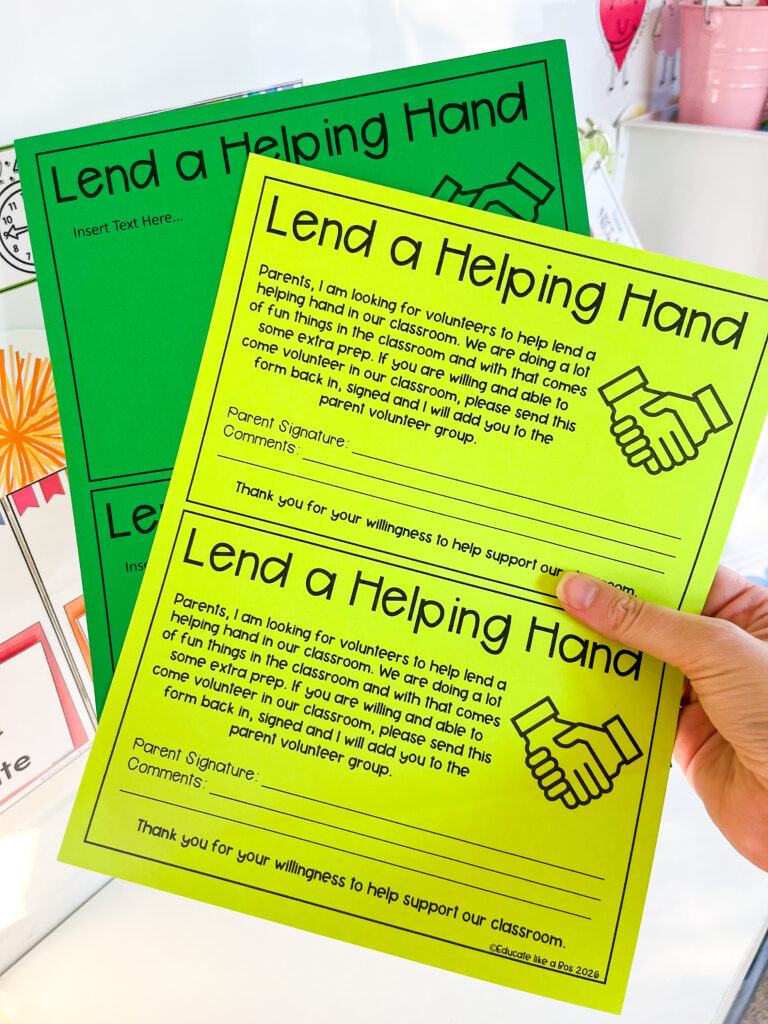
Teaching can come with a lot of prep. Reach out to parents to come help with prepping tasks. There are always parents who want to be more involved. Make sure you check with your school policy first.
Have a sign-up sheet available at parent night and parent/teacher conferences, send an alert to your class on your school’s messaging app, and send a note home asking parents if there are times they can come and help prep. You can use an app like Sign-Up Genius to have available spots that parents can sign up for to come help.
You can grab this editable “lend a helping hand” note to use in your classroom here.
Reevaluate Your Grading
Grading takes up a lot of time. Look into your grading and see if you are overdoing it. Not everything has to be graded and put into the gradebook. Some assignments can be reviewed in class and taken home; others can be group work with one paper that can be reviewed as a group. Look at your school’s policy on the number of grades that need to be entered in the gradebook each week or semester, and meet that. Even exceed it by a few assignments!
Try to automate your grading as much as possible. Give assignments that have answer keys that are quick and easy to grade, and try to complete these grading assignments while students are working independently.
Streamline Your Day
While we are on the subject of reevaluating, let’s look at streamlining your day. If you are feeling overwhelmed by the amount of work and considering taking it home, look through your day and see if there are times you are wasting. Are you chatting in the hallway with coworkers? Are you scrolling during your planning period? Are you hanging out in the teacher’s lounge after school?
While those things are not bad, and you may find you need times like these to catch up or take a break, these are precious moments you could be using to tackle items on your to-do list. You have to consider your time. Twenty minutes of scrolling during your planning period is 20 minutes you might end up staying after school to get lessons prepped for the next day. You simply have to weigh your priorities.
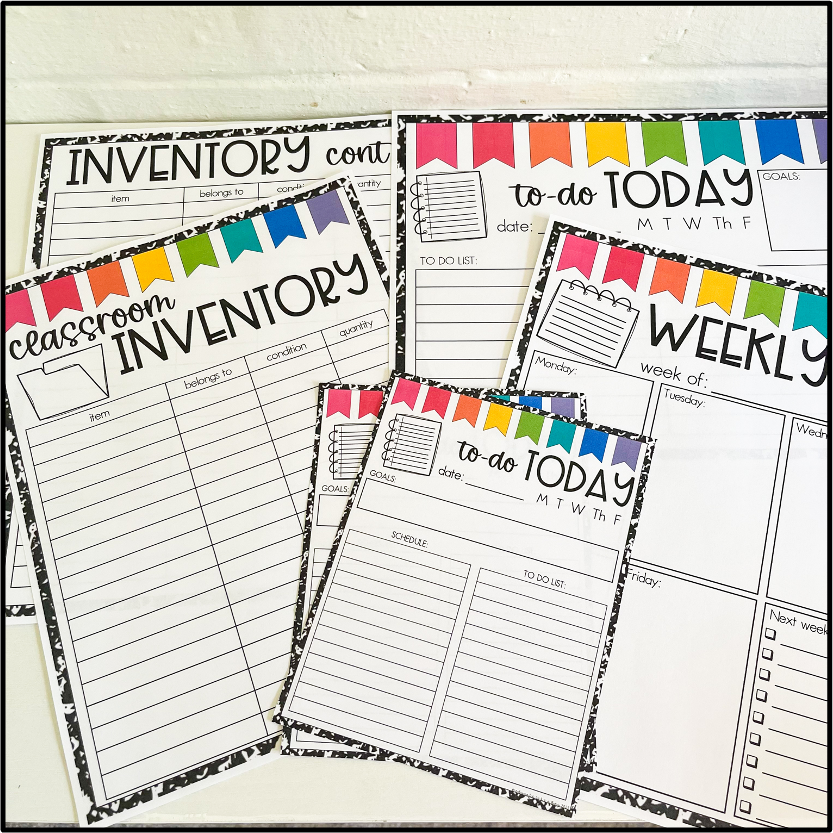
Try writing down the things you need to accomplish throughout the week. Seeing the tasks you have to accomplish and dividing them throughout the week can help you avoid waiting until Friday afternoon to try to get them all done. You can grab these weekly and daily to-do lists in this teacher organization resource
Stop Re-inventing the Wheel
Set up a structured classroom with a routine that stays basically the same. Having routines in place not only helps students know what to expect but also gives you structure and materials to fill specific spots. Instead of completely recreating lesson plans each week, you are keeping the majority of the lesson plan the same. Simply plugging in new information, like page numbers and new updated skills. For example, setting up small-group time can be overwhelming. Especially if you are creating and teaching new centers every week.
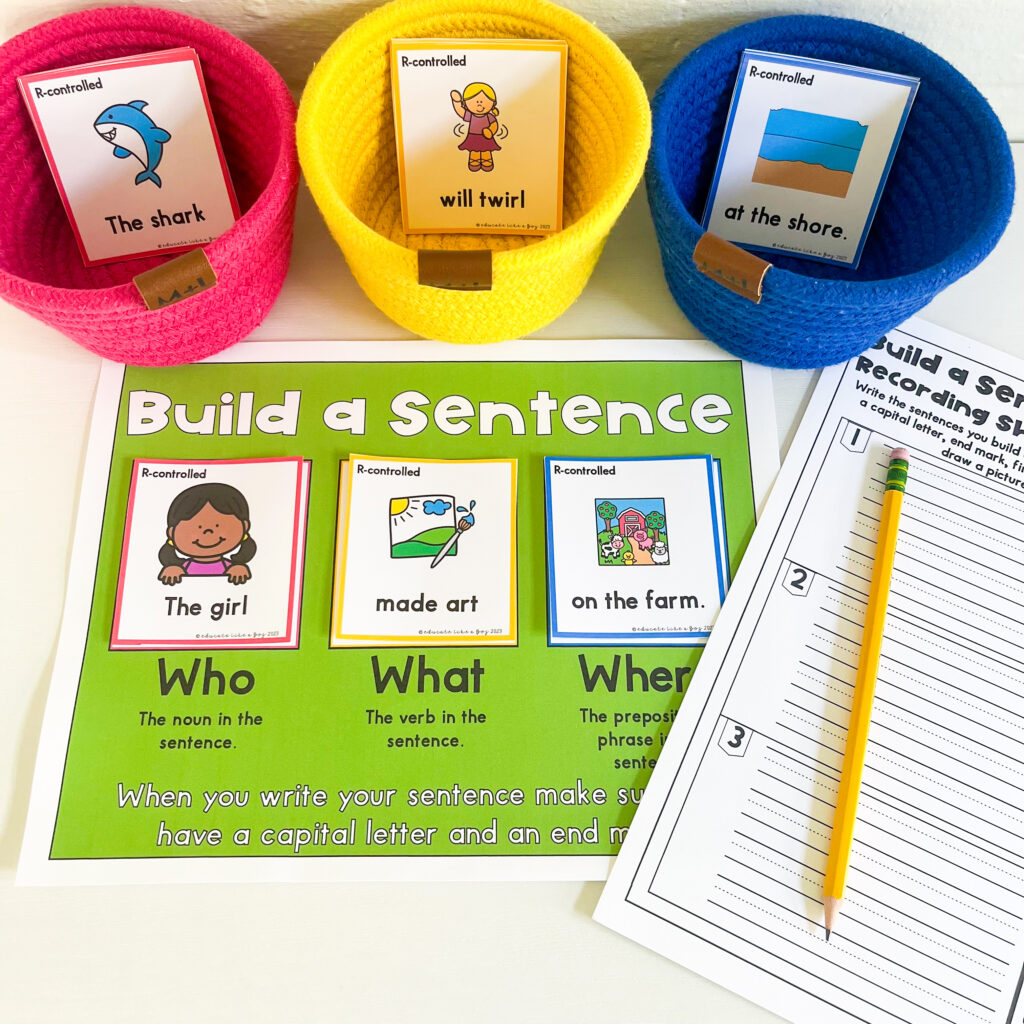
Using routine centers can help alleviate the stress of small group time. Having a writing center/activity that remains the same, the only thing that changes is the skill, which prevents you from having to create a new center, set up a new center, and teach a new center. You can simply update the skill in the center. Students already know how to complete it. This saves you both time and resources. You can check out my routine centers here.
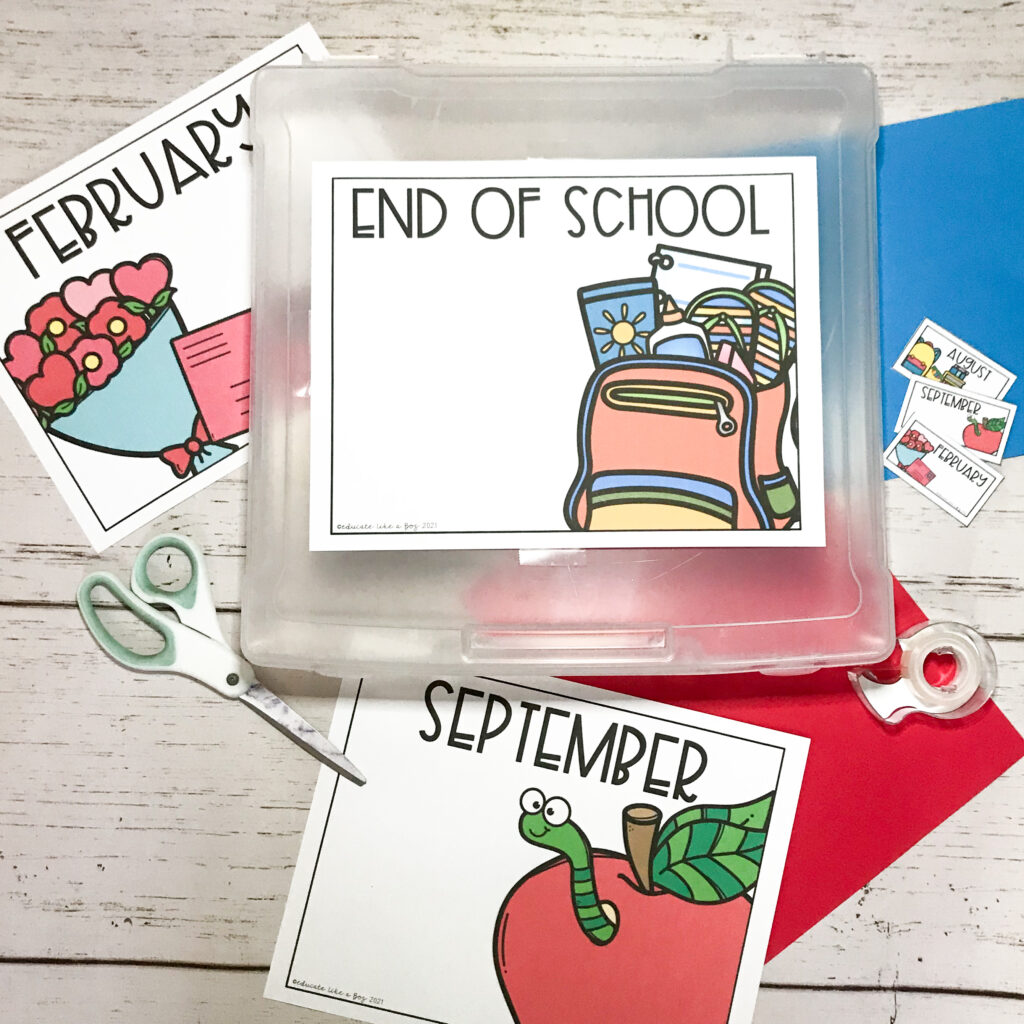
Keep previous lessons from prior years! If you are staying in the same grade, keep your lessons organized and masters either printed or saved digitally in folders so that you can reuse them. Organize themed, holiday-related, and month-specific supplemental materials in organized containers. So all you have to do is grab the binder or container of materials, and it’s ready to go! You can grab these free monthly bin labels here.
Prioritize Self-Care
You must take time for yourself! As a teacher, you are constantly pouring into others. Even outside of work, you are pouring into a significant other, or your own children, or friendships, etc., so you have to make sure to take a little time for yourself.
Make it a point to do something for yourself at least once a week! It can be something small, like going to get your favorite cup of coffee or reading a couple of chapters of a book alone, or something bigger, like going to a movie you have been wanting to see or getting a pedicure.
Whatever you choose to do, make sure you are taking time for yourself to refill your cup. You cannot pour from an empty cup!
Take Mental Health Days
You have days, do not feel guilty about using them. I spent years building up sick and personal days (which I ultimately lost) because I felt guilty about using them. If you have the days, and you are starting to feel burnt out or overwhelmed, take a day to reset! That could mean taking a day to do things for yourself – a massage, mani/pedi.
It could mean you are feeling overwhelmed at home and need a day to schedule all the appointments and catch up on housework. It could also mean you are completely overwhelmed by all the school things you have to do, and you need to reset your school life so you take all of the grading and lesson planning and get it done during your mental health day. Sometimes it can help your mental health and the feeling of overwhelm to actually work on school things uninterrupted and get a ton of grading and planning done.
Build a Supportive Community
Collaborate with colleagues and use shared lesson plans. Work together to gather ideas, make copies, prep materials, etc.
Discuss the challenges you are facing that make you feel less isolated; it is always helpful to know that you are not alone. But do not stay in a place of venting; try to encourage one another and share helpful ideas to help you overcome the difficulties you are facing.
Take a few minutes each week to reflect on something that went well in your classroom. Celebrate your wins together!
Preventing teacher burnout isn’t about caring less; it’s about protecting your time, energy, and boundaries so you can keep doing the work you love. Small, realistic changes can make a big difference in how you feel day to day.
Start with one or two tips and build from there. Taking care of yourself isn’t selfish; it’s what helps you stay present, effective, and in this profession for the long run.